Your Social Security Disability Lawyers
Job 29:15 - “I was eyes to the blind and feet to the lame.”
What SSDI Means for You
First, SSDI is a federal program. In simple terms, it helps disabled workers. More importantly, it provides steady income.
To qualify, you must have worked before. Because of this, work history matters. In addition, medical proof is required. Therefore, SSDI protects families. As a result, it offers financial stability.
When to Apply for Disability Benefits
If you cannot work, help may exist. For example, illness or injury may stop work. Sometimes, chronic conditions worsen over time. Because of this, many people think about SSDI. Often, they talk to friends or family first. Unfortunately, myths spread quickly. For that reason, facts matter most. Below, we'll expel some common myths.
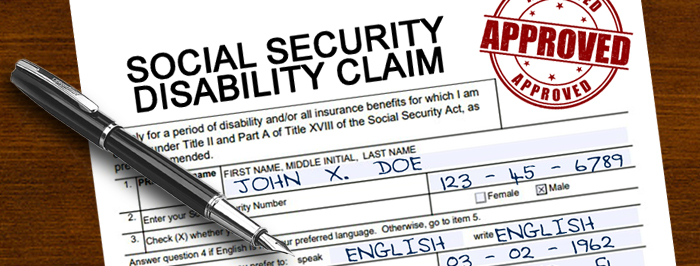
 MYTH: I shouldn’t bother to apply. I’ll probably just get denied anyway.
FACT: This is not true. Yes, many first claims get denied. Still, appeals often succeed. Therefore, applying still matters. Most importantly, appeal rights exist. When the appeal process proves that you have a disability that fits within the SSA guidelines, they will absolutely pay out.
MYTH: If my doctor says I’m disabled, I’ll automatically qualify for Social Security Disability benefits.
FACT: In reality, the SSA decides claims. Still, medical records are critical. Because of this, details matter. Clear records always improve your approval chances.
MYTH: Once you’re on Social Security Disability, you’re on it for life.
FACT: While it’s possible that you may be on Social Security Disability for many years or decades, it’s actually not an automatic guarantee. The Social Security Administration will periodically review your medical condition. If it is anticipated that your condition will improve, the first review is generally scheduled from 6 to 18 months after the date you first applied for disability benefits. If improvement of your condition is technically possible but your doctor doesn’t expect you to improve, then medical reviews are scheduled roughly about every 3 years. If your doctor states that your condition is not one that is possible to ever improve, it’s typically 7 years between each review.
MYTH: Social Security Disability Income will be able to replace the majority of my work-related income.
FACT: Unfortunately, Social Security Disability Income is designed to replace only a portion of the applicant’s lost income. It’s meant to provide assistance in meeting people’s basic living needs, and the payments are modest.
MYTH: If I go to work, I’ll automatically lose my Medicare or Medicaid.
FACT: As long as you continue receiving a benefit check in any amount, you will keep your health insurance. If you earn so much by working that your Social Security Disability checks stop, you may still qualify for Medicare for up to 93 months. If you currently receive Medicaid, you may be eligible to continue to receive Medicaid even if you stop receiving Social Security benefits due to your new work status. You just need to meet certain eligibility requirements, including earning less than a threshold amount set by each state. It’s also possible to return to work while collecting Social Security Disability and without jeopardizing your benefits. You may be eligible for a 9-month trial period to test whether you can work.
MYTH: If I go to work and my Social Security checks stop, but then my disability forces me to stop working again, it will take forever for me to get approved for benefits again, so it’s probably best if I don’t try to work.
FACT: If your income from wages caused your benefits to cease within the past five years, and if you meet a few other requirements – including still having the original medical condition you had when you were first approved – you will not need to reapply. A program called Expedited Reinstatement has been put in place as a work incentive for recipients of Social Security Disability.
MYTH:When applying for Social Security Disability, I need to immediately hire a lawyer.
FACT: The first step is actually to discuss the matter with your doctor. The doctor will have to say that he or she thinks you are disabled before you’ll get anywhere with the Social Security Administration. If your doctor advises you to try a different medication, medical device, or physical therapy, that’s because he or she anticipates that these may help you be able to continue working. You need to take the doctor’s advice and try the suggestions before you give up working completely. If you don’t, the Social Security Administration may think you don’t want to cooperate with medical advice or that you have no desire to continue working.
MYTH: When applying for Social Security Disability, I just need a note from my doctor that says I’m disabled.
FACT: Having thoroughly detailed documentation of your disability greatly increases the likelihood that you’ll be approved for Social Security Disability benefits. The Social Security Administration’s website provides a detailed list of what they look for during their investigation. It would greatly help you achieve a positive resolution of your case if you’d gather as much of this information as you can before you submit your initial application. The more thorough the information you provide, the better.
MYTH: My Social Security Disability checks will start coming immediately after I’m approved.
FACT: Actually, processing can take up to five months before you are ever issued a payment. Once your request is approved, the Social Security Administration will send you a letter with the effective date. Your first payment will then be issued for the sixth full month following your disability effective date. Plus, you won’t receive the payment until the seventh month following your disability effective date, since payments are made during the month after the month they cover.
MYTH: The odds of young people becoming severely disabled and needing Social Security Disability benefits is rare.
FACT: The Unites States government estimates that one in four workers will become disabled before they reach retirement age.
MYTH: Other than hiring an attorney, there are no resources to help me apply for Social Security Disability benefits.
FACT: The Social Security Administration has published a disability insurance booklet on their website which includes a list of the information you’ll need to start your application process. Also, various foundations for different disabilities often offer guidance such as the National MS Society, the National Psoriasis Foundation, and the National Alliance on Mental Illness. If you have a specific illness or injury, it may benefit you to see if there is a foundation for that injury or illness that can assist you in the application process. However, if your initial application is denied, you may want to consider hiring an attorney for your appeal.
How Much Money Will Social Security Disability Pay Me?
 The Social Security Administration calculates Social Security Disability benefit payments by averaging your average lifetime earnings before your disability began. It has nothing to do with how severe your disability may be or how many assets you already have.
The amount of each disability payment is unique for each individual. The Social Security Administration uses a complex weighted formula to calculate each person’s individual benefits, up to the maximum benefit allowed ($4,152 as of 2026).
The Social Security Administration bases your retirement benefits, as well as your disability benefits, on the amount of income on which you’ve paid Social Security taxes. Most Social Security Disability payments average between $700 and $1,700 per month, with the estimated monthly median being $1,580. This amount may be reduced, however, if you are receiving simultaneous disability payments from another source or sources.
Social Security Disability Doesn’t Cover All My Bills. Can I Still Work Part Time?
Generally, Social Security Disability recipients can continue to receive benefits if they work a job that earns no more than $1,690 per month (as of 2026 – an $70 increase from 2025) or no more than $2,830 if the disabled beneficiary is blind (a $130 increase from 2025). However, there are exceptions to this rule where in the beneficiary can work during a trial period during in which they can make more than the guideline amount without losing their benefits.
 Social Security Disability recipients are allowed to test their ability to work and while still receiving their full benefits, regardless of how much, for a trial period of nine months. In 2026, the Social Security Administration considers any month where a Social Security Disability beneficiary receives income of more than $1,210 to be a trial work month.
For the 36 months following a nine-month trial work period, a person can still receive Social Security Disability benefits for any month where their earnings fall under the guideline. This is known as the extended period of eligibility. During these three years, if the beneficiary earns less than the “substantial income threshold,” which is $1,690 per month (in 2026 – up $70 from 2025), they will receive their Social Security Disability benefits, but if they earn more than $1,690 per month, they will not receive Social Security Disability benefits for that month.
After the trial work period, if the Social Security Disability benefits were cut off because the beneficiary’s income exceeded the limit, the Social Security Administration allows a period of five years during which the beneficiary’s benefits can be reinstated if they are forced to stop working again because of their disability. During this five-year period, the Social Security Administration will not require the beneficiary to file a new application to receive their benefits. This process is known as expedited reinstatement.
What Factors Determine My Eligibility for Social Security Disability Benefits?
In order to qualify for Social Security Disability benefits, the applicant must have a medical condition that meets the Social Security Administration’s definition of a disability. Social Security Disability benefits are only given to eligible applicants who suffer from severe, long-term, total disabilities.
The qualifying “severity” means that the applicant’s condition must interfere with their basic work-related activities. The term “long-term” does not mean that the applicant’s medical condition needs to be permanent, but it must be expected to last for at least 12 months. And the Social Security Administration defines “total disability” as the applicant being unable to work at “substantial gainful activity” for at least 12 months.
So, for a Social Security Disability benefits application to be approved, the applicant must prove that they have a severe medical impairment that is documented by objective medical evidence, prove that their condition has limited their ability to perform the duties of their job and that these limitations make it impossible for them to return to work, prove that they also lack the ability to change jobs to a different type of employment where they could perform job duties, and they must provide evidence that their disabling condition is expected to last for at least one year while being severe enough to make it impossible for them to engage in the duties of their job.
How Does the Whole Process Actually Work?
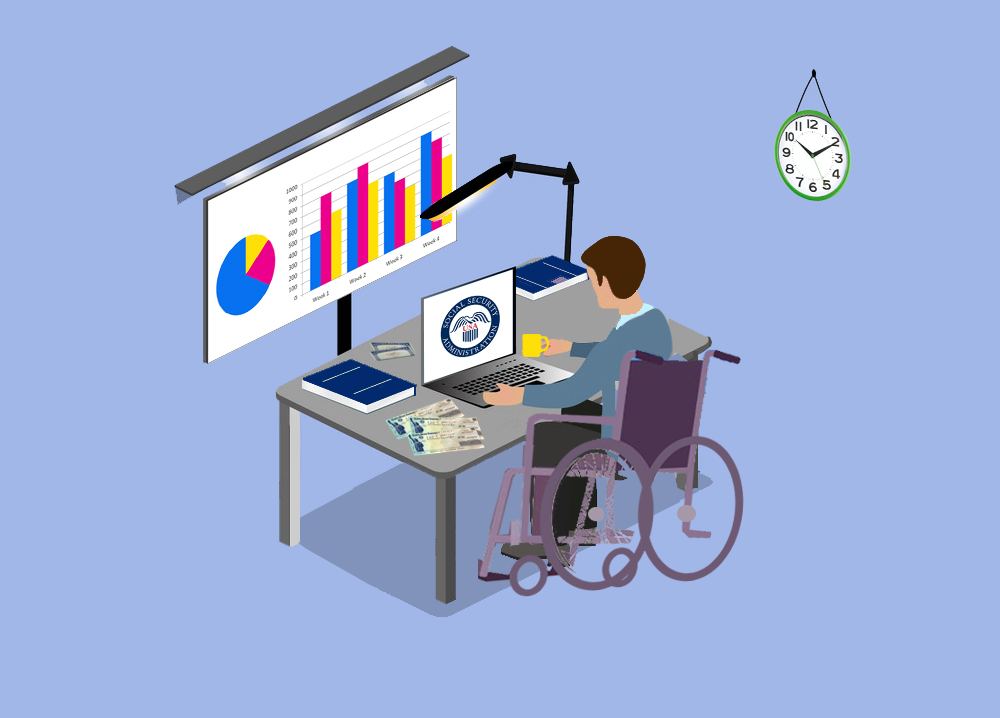 When a person files an application for Social Security Disability benefits, the application is sent to a Social Security field office. From there, the application in reviewed and transferred to a state level Disability Determination Services Agency. The case is then assigned to a disability examiner.
The first step for the disability examiner is to request the applicant’s medical records. The response time from the applicant’s doctor(s) is what usually causes the longest delay on any given case. The lag time in waiting for medical records can be from weeks to months. (If you make your doctor aware that you are filing for Social Security Disability benefits and regularly follow up with the doctor’s business office, this may help in speeding up the response time for your application.)
When all of the medical records are obtained, the examiner evaluates the fundamentals of the case. However, on the occasion that a certain case is particularly strong, the examiner may not have to wait for all of the records. The decision could be made with just a portion of the medical records if the records support a disabled finding.
Upon studying the medical records, the examiner will be able to determine if the applicant has a condition that is named in the Social Security Administration’s list of impairments and if so, if the disability meets the threshold criteria.
After I'm Approved, When Will I Receive My First Check?
After an applicant is approved for Social Security Disability benefits, there is a mandatory five-month waiting period before checks can be issued. Before you receive your first payment, the Social Security Administration will send you a letter with your effective date. Your first payment will be issued for the sixth full month following your disability effective date. However, you will receive this initial payment during the seventh month after your application was approved, because checks are issued during the month following the month they cover. From that point forward, you should receive your check on or around that same date every month.
The reason for this delay is that Social Security Disability benefit payments start only after the applicant has been disabled for five months. Benefits continue until the person’s condition improves enough that they can start working again, or until they reach retirement age, at which point they then stop Social Security Disability benefits and start Social Security Retirement benefits.
Hebrews 12:13 - 13 “Make level paths for your feet, so that the lame may not be disabled, but rather healed.”
Call (863) 287-6388 in Polk County or (813) 287-6388 in Hillsborough County and Pinellas County today to schedule a free confidential consultation with an attorney at Your Christian Law Firm, Dean Burnetti Law.
Your Christian Law Firm, Dean Burnetti Law represents Injury Victims in Polk County, including: Lakeland, Auburndale, Bartow, Haines City, Lake Wales, Mulberry, Polk City, and Winter Haven; in Hillsborough County, including: Brandon, Tampa, and Plant City; in Pinellas County, including Clearwater, St. Pete, Gulfport, Treasure Island, Largo, Oldsmar; and all of the surrounding Greater Central Florida and West Central Florida Areas.
Our Statement of Faith
We declare that Jesus Christ is the Lord of all. That the Holy Spirit abides in the midst of all within our halls. That the power of prayer is our shield and sword.
We declare that Christ is the cornerstone of this firm.
LAKELAND OFFICE:
1937 East Edgewood Drive, Suite 102,
Lakeland, Florida 33803
Lakeland: (863) 287-6388
BRANDON OFFICE:
413 Lithia Pinecrest Road,
Brandon, FL 33511
Brandon: (813) 287-6388
ST. PETE OFFICE:
11300 4th Street N., Ste. 140,
St. Petersburg, FL 33716
St. Pete: (813) 287-6388